
Description
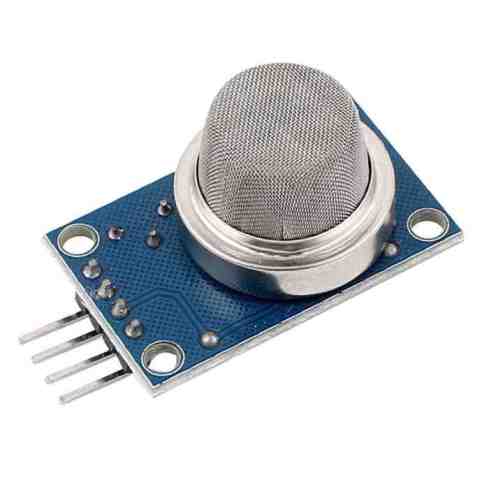
MQ Series Gas Sensor Detector Modules for DIY (MQ 2/3/4/5/6/7/8/9/135)
MQ Series gas sensors are a popular and cost-effective range of electrochemical sensors. They are designed to detect various gases and are widely used in air quality monitoring, industrial safety, and leak detection. Below is a detailed overview of each sensor in the series and the specific gas it detects:
| Sensor | Target Gas | Other Sensitive Gases |
|---|---|---|
| MQ-2 | LPG, Smoke, H2 | Methane, Butane, CO |
| MQ-3 | Alcohol (Ethanol) | Methane, Benzene, Hexane |
| MQ-4 | Methane | CNG |
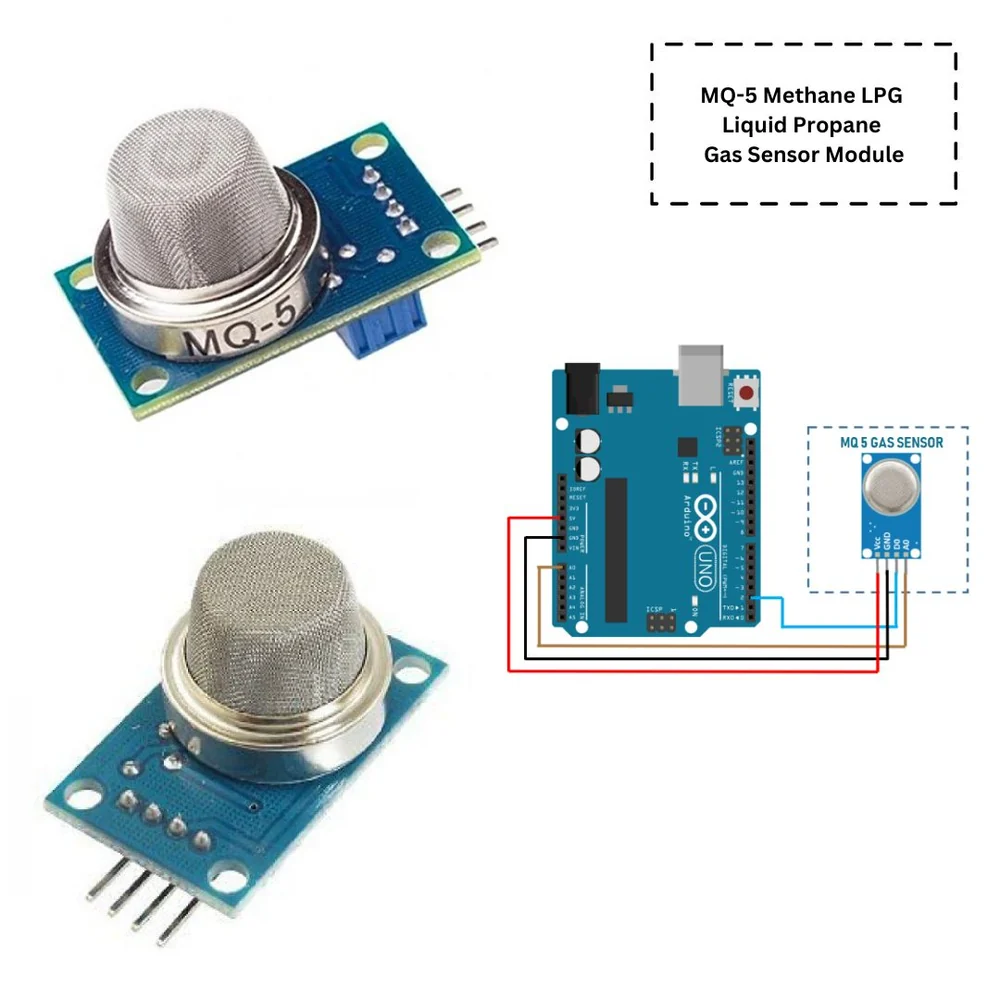
| MQ-5 | LPG | Propane, Butane |
| MQ-6 | LPG, Butane | Propane |
| MQ-7 | Carbon Monoxide (CO) | – |
| MQ-8 | Hydrogen (H2) | – |
| MQ-9 | Smoke | CO, Methane, LPG |
| MQ-135 | Ammonia (NH3), Benzene, Alcohol, Smoke | CO2 |
How Does the MQ-2 Gas Sensor Work?
The MQ-2 contains a gas-sensitive semiconductor element that is heated during operation. When certain gases interact with the sensing surface, its electrical resistance changes. The surrounding circuit converts this change into an electrical signal.
On common breakout modules, the analog output can be monitored by a microcontroller to observe changes in sensor response. A comparator circuit may also provide a digital output when the signal crosses a threshold set using the onboard potentiometer.
The sensor requires an initial warm-up period and suitable calibration. Its readings are affected by environmental conditions, so it should not be treated as a precise gas-concentration instrument without an appropriate calibration process.
Applications of the MQ-2 Sensor Module
The MQ-2 is useful for learning, prototyping, and experimenting with gas-sensitive electronics in projects such as:
- Arduino-based gas-sensing demonstrations
- Smoke-response experiments
- LPG and combustible-gas detection prototypes
- Environmental monitoring experiments
- Microcontroller-based sensor projects
- Electronics laboratory exercises
- DIY automation prototypes
- Educational science and engineering projects
Why Choose the MQ-2 Gas Sensor Module?
The MQ-2 is a widely used component in introductory electronics because it provides a practical way to explore how gas-sensitive sensors work. Its analog response and the digital threshold output found on many module versions allow users to experiment with sensor readings, thresholds, indicators, and microcontroller logic.
It can be a useful learning tool for students, makers, and electronics enthusiasts building prototype sensing systems.
Basic Connection Guide
Before connecting the sensor, check the pin labels and voltage specifications on your particular module.
- VCC: Connect to the specified supply voltage, commonly 5V for typical breakout modules.
- GND: Connect to the circuit ground.
- AO: On modules with an analog output, connect it to a compatible analog input.
- DO: On modules with a digital output, connect it to a compatible digital input.
Check the microcontroller’s maximum input voltage before wiring. A 5V sensor output may require voltage scaling or level shifting when connected to a 3.3V-only board. Allow for the required warm-up time and follow the sensor manufacturer’s instructions.
Important Safety Information
The MQ-2 module is intended for learning and prototyping. It is not a certified life-safety device. Do not rely on this module to protect people or property from gas leaks, fire, or hazardous atmospheres. Use certified gas alarms and detectors for real-world safety applications.
Operate the sensor according to its datasheet, since the sensing element uses a heater and can become hot. Keep it away from ignition sources when combustible gases may be present, and never test it by deliberately releasing flammable gas in an unsafe environment.
Buy MQ-2 Gas Sensor Module from GETVOLT
Add gas-sensing capabilities to your electronics experiments with the MQ-2 Air Quality Gas Sensor Module. It is a useful component for Arduino learning, DIY sensor demonstrations, and prototype electronics projects involving smoke and combustible-gas response.
Explore more sensors, electronic components, and DIY project accessories at GETVOLT for your next creation.
While these sensors are versatile and useful, they do have some limitations:
Sensitivity: They can detect other gases besides their target gas, which might lead to false alarms.
Accuracy: Their readings can be affected by humidity and temperature changes.
Long-term Stability: Over time, their sensitivity can drift, necessitating periodic calibration.
Reviews
There are no reviews yet.